Church auditorium seating affects more than the appearance of a worship space. It influences how congregations gather, how staff prepare for special events, and how efficiently a venue accommodates different activities. Fixed chairs provide an organized layout with clearly defined seating positions, while flexible seating allows greater freedom to rearrange the room. The right choice depends on attendance patterns, available floor space, maintenance resources, and the role of the auditorium.
For churches planning a new building or renovating an existing hall, comparing these options before procurement can prevent practical problems later. Seating decisions should account for regular worship services as well as weddings, community meetings, concerts, and seasonal gatherings. Understanding the differences helps project teams select an arrangement that supports daily use without creating unnecessary work for facility staff.
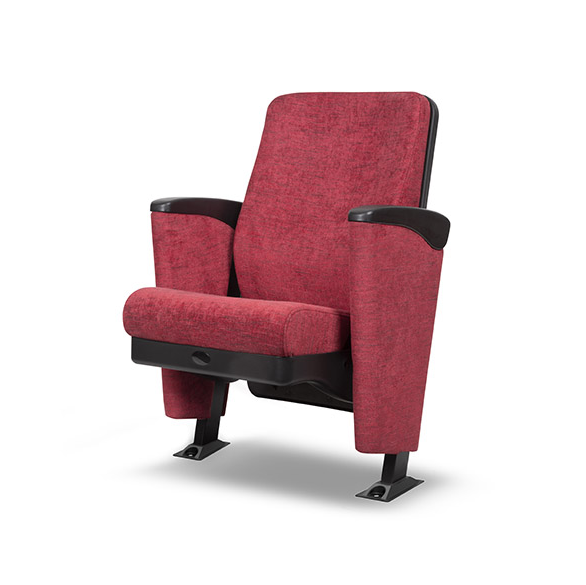
Fixed Seating Creates a Consistent Layout
Fixed seating keeps chairs in predetermined positions. This arrangement helps maintain clear rows and predictable aisles, which can simplify movement during regular services. Facility managers can plan seating capacity around the room dimensions, entrances, stage position, and required circulation routes.
For venues that host services on a regular schedule, fixed seating also reduces preparation work. Staff do not need to arrange individual chairs before every gathering. Once the layout has been established, cleaning teams can follow a consistent routine, and visitors can become familiar with the seating arrangement.
However, fixed chairs offer less freedom when an event requires a different floor plan. A church that regularly hosts exhibitions, group activities, or large community meetings may need to reserve another room for these functions. Project teams should consider how often such changes occur before committing to a permanent layout.
Flexible Seating Adapts to Changing Activities
Flexible seating uses movable chairs that staff can arrange according to the event. Rows may be widened, sections can be separated, and chairs can be removed when the floor needs to support activities other than seated gatherings. This approach can suit churches with varied weekly schedules.
The main advantage is adaptability. A small weekday meeting may require only a few rows, while a holiday service may need additional seating. Movable chairs can also support workshops and community programs that use circular or grouped arrangements instead of conventional rows.
Nevertheless, flexibility introduces additional work. Staff must move, align, store, and inspect chairs between events. Storage space becomes particularly important when a large number of chairs must be removed. Buyers should estimate the time required for room conversion and identify who will handle these tasks.
Compare Costs Beyond the Initial Purchase
The purchase price is only one part of a seating budget. Flexible chairs may require storage racks, additional floor space, and labor for repeated rearrangement. Fixed seating may involve more planning during installation, especially when the project requires coordinated floor layouts and attachment points.
Maintenance costs also differ. Movable chairs can be inspected individually and replaced or relocated when necessary. Fixed seating can provide a more stable arrangement, but damaged components may be harder to access if the installation restricts movement around the chair.
Procurement teams should compare expected service life, repair procedures, cleaning requirements, and replacement availability. For projects with long operating schedules, a lifecycle estimate can provide a more useful basis for comparison than the unit price alone.
Comfort and Safety Need Practical Evaluation
Seating comfort matters during extended services, ceremonies, and performances. Buyers should review seat dimensions, cushion support, backrest shape, armrest design, and the ease of getting in and out of each row. These details affect visitors of different ages and mobility levels.
For chairs for church auditorium projects, aisle width and circulation routes deserve the same attention as the chairs themselves. The final layout should follow applicable building and fire safety requirements. Buyers should also review accessibility provisions, including suitable spaces for wheelchair users and unobstructed routes to exits.
Flexible layouts can make temporary adjustments easier, but movable furniture still needs a clear arrangement plan. Fixed seating provides consistent row positions, although the original design must accommodate the venue’s circulation needs. In either case, the project team should review the proposed floor plan before placing the order.
Product Design Can Support Long Services
Seat construction is another consideration when comparing permanent and movable arrangements. Cushion shape, back support, structural materials, and seat-return mechanisms affect the experience of regular users. Buyers should examine these features alongside the maintenance procedures required by the facility.
The LANO PLASTIC LS-19601P from Leadcom seating offers one example of auditorium seating designed for church and auditorium environments. Its back and seat cushions have an ergonomic shape with lumbar support. The outer back, seat pan, and armrests use high-impact polypropylene, while the legs provide steel structural support.
The model also features a counterweighted tip-up seat mechanism designed for long-lasting operation. This feature allows the seat to return upward when not in use, helping keep the row arrangement compact. Buyers should confirm the model’s dimensions, installation requirements, finish options, and suitability for their planned layout before specifying it.
Match the Seating Plan to Facility Operations
The frequency of room changes often determines which arrangement makes practical sense. Churches that hold services in the same configuration throughout the week may benefit from fixed rows. Facilities that share their halls with community groups may prefer movable seating, provided sufficient storage and staff time are available.
A hybrid layout can also be considered. Fixed seating may occupy the main worship area, while a separate section uses movable chairs for overflow attendance or occasional group activities. This approach requires careful space planning, but it can balance layout stability with operational flexibility.
During procurement, project managers should document expected attendance, event frequency, cleaning routines, storage capacity, and maintenance responsibilities. They should also request layout drawings and confirm installation details with the supplier. These steps make it easier to compare proposals on practical requirements rather than appearance alone.
Make the Decision Around Long-Term Use
Flexible seating offers freedom to change room arrangements, while fixed chairs provide consistent rows and reduce the need for repeated setup. Neither option suits every church auditorium. The decision depends on how the venue operates, how frequently events differ, and what resources are available for daily management.
When evaluating seating for a church auditorium, buyers should balance capacity, comfort, circulation, maintenance, and lifecycle costs. Suppliers such as Leadcom seating can help project teams review product configurations and seating requirements for their intended applications. A clearly defined brief makes it easier to select seating that fits the building and supports its long-term use.
