Selecting appropriate molecular diagnostic panels requires rigorous evaluation of clinical performance data, assay design parameters, and laboratory workflow demands every day. Hospital directors face complex decisions when balancing high diagnostic accuracy against rapid patient turnaround requirements under intense operational pressure.
Establishing structured selection criteria prevents diagnostic errors and optimizes resource allocation across hospital pathology departments during seasonal infection surges. Diagnostic laboratories constantly encounter diverse infectious threats that demand precise pathogen identification under strict clinical deadlines and regulatory compliance frameworks.
Assessing Clinical Sensitivity and Specificity Benchmarks
Reliable infectious disease detection depends fundamentally on high analytical sensitivity and specificity metrics published by certified assay manufacturers worldwide in clinical practice. Clinical validation data must demonstrate exceptional accuracy to minimize false-positive or false-negative reporting risks during active regional outbreaks and hospital admissions.
Laboratory managers scrutinize validation reports to ensure diagnostic kits meet stringent international regulatory requirements before routine clinical adoption across networks. Evaluating limit of detection parameters reveals an assay’s capability to identify low-titer viral loads during early infection stages when clinical symptoms remain ambiguous.
Matching Specimen Compatibility with Diagnostic Needs
Specimen collection integrity directly dictates the reliability of upstream nucleic acid extraction and subsequent thermal cycling procedures in daily clinical routines and testing schedules. Assays optimized for specific clinical matrices, such as targeted throat swab samples, eliminate protocol ambiguities during collection phases.
Standardization across diverse specimen types reduces pre-analytical handling errors and safeguards biological samples from environmental contamination risks during transit. Maintaining sample compatibility prevents enzyme inhibition caused by incompatible biological matrices or residual transport media components during testing.
Evaluating Analytical Targets and Internal Controls
Choosing a comprehensive assay configuration requires examining genetic target selection, such as specific viral genes or highly conserved genomic regions across testing runs. Advanced molecular assays utilize multiplex PCR to detect multiple pathogen targets simultaneously within a single reaction tube without signal interference.
Such configuration efficiency conserves precious clinical specimens and reduces reagent consumption across high-volume testing schedules in busy hospital laboratories. Internal controls embedded within amplification protocols monitor the entire testing process from extraction to final fluorescence detection stages.
Integrating Throughput and Processing Speed Metrics
Operational efficiency relies heavily on matching assay runtime characteristics with hospital laboratory staffing schedules and equipment processing capacity limits during testing procedures. Modern molecular diagnostics platforms supporting high-density batch processing enable laboratories to manage heavy daily workloads effortlessly during peak operational windows.
Rapid thermal cycling protocols complete numerous tests within concise operational timeframes, successfully fulfilling urgent clinical demands from emergency departments. Instrument compatibility represents another vital evaluation parameter that prevents costly hardware upgrades or unnecessary laboratory workflow restructuring initiatives.
Deploying the Measles & Rubella Test Kit in Clinical Settings
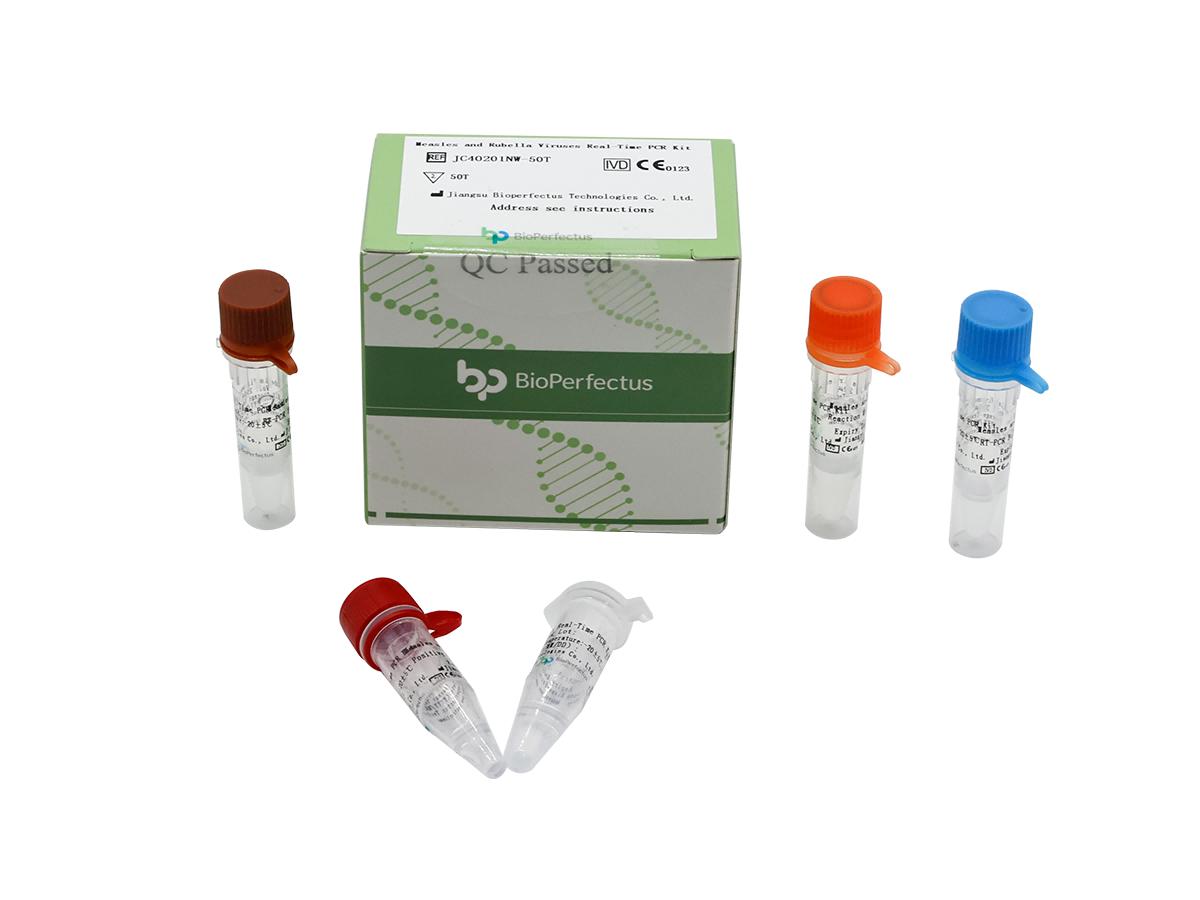
Targeted viral differentiation requires specialized assay designs capable of distinguishing clinical symptoms with overlapping epidemiological presentations among vulnerable patient populations during clinical protocols. Utilizing the Measles & Rubella Test Kit allows clinical laboratories to differentiate viral nucleic acids efficiently from single throat swab specimens.
Such dual-target capability addresses complex diagnostic requirements during public health surveillance and routine clinical screenings. Commercial platforms developed by BioPerfectus incorporate optimized target selection, including the N gene of Measles virus and E1 gene.
Expanding Panel Utility Through Advanced Design
Laboratories require adaptable testing frameworks capable of incorporating novel pathogen targets as epidemiological conditions shift globally across different testing environments. Modern diagnostic systems leverage multiplex PCR formats to maximize information output from limited patient sample volumes without sacrificing analytical accuracy.
Flexible assay configurations allow pathology teams to respond rapidly to emerging infectious disease threats without redesigning entire testing workflows. Manufacturers continuously refine primer and probe combinations to eliminate cross-reactivity with common respiratory flora and commensal microorganisms.
Clinical Implementation of Specialized Diagnostics
Deploying the Measles & Rubella Test Kit within hospital networks streamlines screening protocols for suspected rash illnesses effectively and reliably across diagnostic workloads. High clinical sensitivity and specificity figures ensure dependable pathogen identification during critical public health investigations and routine population monitoring.
Integrating standardized assays empowers healthcare institutions to maintain rigorous public health monitoring standards across diverse demographic groups. Technicians benefit from simplified protocol instructions that reduce hands-on preparation time significantly during busy working shifts.
Strategic Procurement and Manufacturer Support Standards
Procuring molecular diagnostic supplies involves evaluating manufacturer reliability, technical documentation clarity, and ongoing customer support availability for laboratory personnel ensuring testing accuracy. Clinical laboratories rely on established vendors offering comprehensive validation data and regulatory certifications, such as CE-IVDR compliance standards.
Partnering with BioPerfectus ensures uninterrupted reagent supply chains and expert guidance for troubleshooting complex assay parameters effectively. Investing in versatile assay architectures allows institutions to expand clinical testing menus without overhauling core laboratory infrastructure systems.
Future Readiness in Infectious Disease Screening
Long-term operational success depends on continuous protocol evaluation, staff training, and adherence to rigorous quality assurance standards across all clinical workflows. Utilizing a verified Measles & Rubella Test Kit safeguards institutional reputation through reproducible, evidence-based diagnostic outputs for patient management.
Supported by BioPerfectus manufacturing excellence, clinical laboratories achieve sustainable diagnostic accuracy and robust public health protection daily. Adopting validated multiplex PCR systems empowers departments to manage emerging infectious threats with absolute operational confidence.
