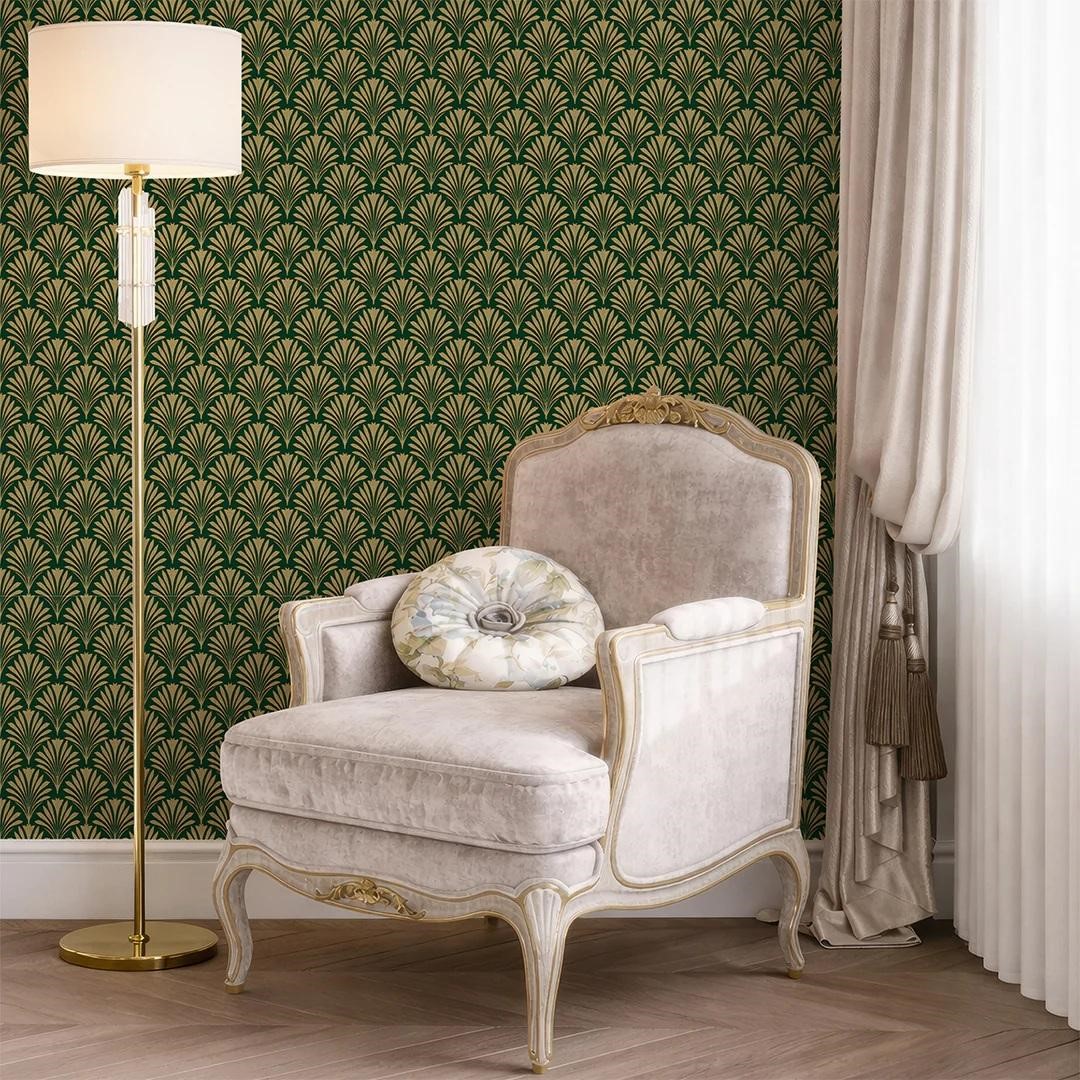
There’s a reason art deco wallpaper keeps resurfacing every few years — the aesthetic is simply too good to stay dormant for long. Born in 1920s Paris and made iconic by the Jazz Age, Art Deco is built on geometry, symmetry, and unabashed glamour. Fan shapes, sunbursts, chevrons, stepped arches, and intricate lattice patterns rendered in gold, black, emerald, and ivory. It’s a style that knows exactly what it is and commits fully. And right now, after years of quiet minimalism dominating interiors, people are ready for that kind of confidence again.
A Brief History Worth Knowing
Art Deco emerged between the two World Wars as a reaction against the organic, flowing lines of Art Nouveau. Where Art Nouveau looked to nature, Art Deco looked to industry, machinery, and modernity. The Chrysler Building in New York, the interiors of the Savoy in London, the set design of The Great Gatsby — all of it draws from the same visual vocabulary: bold geometry, rich materials, and an unapologetic sense of luxury.
What makes Art Deco so durable as an interior trend is that it translates remarkably well to wallpaper. The geometric patterns — fans, hexagons, chevrons, stepped forms — are inherently flat and graphic, which means they work beautifully as a repeating wall pattern in a way that more three-dimensional styles don’t.
Where Art Deco Wallpaper Works Best
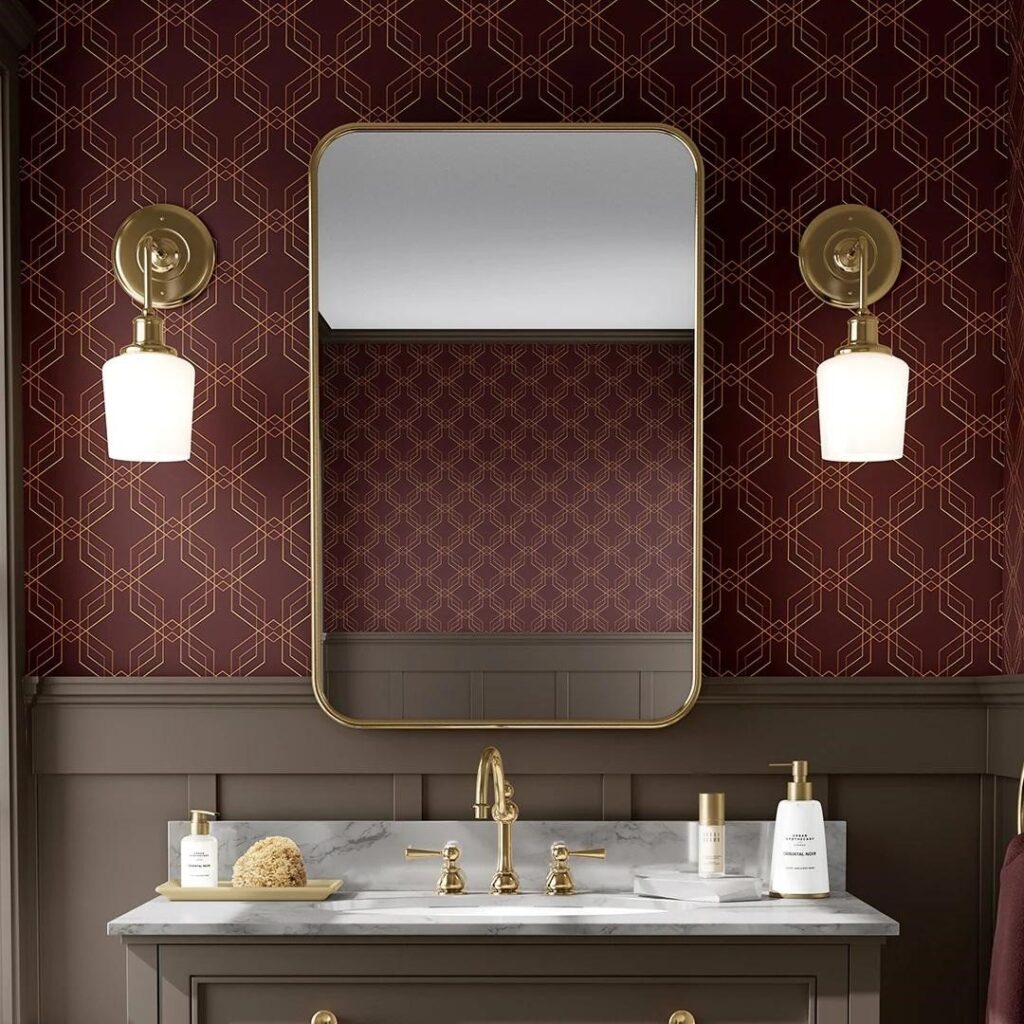
Unlike some wallpaper styles that suit any room, Art Deco has strong opinions about where it belongs. It thrives in spaces with some architectural weight to match its visual confidence.
Entryways and hallways are the single strongest application. An entryway with Art Deco wallpaper — say, a deep navy and gold fan pattern or a black and ivory geometric — sets a tone for the entire home the moment guests walk in. Because hallways are transitional spaces, the drama of the pattern doesn’t overwhelm; it impresses.
Dining rooms are a close second. Art Deco and dinner parties are natural companions. The aesthetic was born in an era of cocktail hours and jazz clubs, and it still carries that energy. A dining room with gold and black geometric wallpaper, paired with a statement chandelier and velvet chairs, feels genuinely special.
Home bars and entertainment spaces — if you have one — are an obvious fit. The Art Deco era invented the concept of the well-appointed home bar, and the aesthetic translates perfectly to that kind of dedicated social space.
Bedrooms are trickier. Art Deco can work beautifully as a bedroom accent wall, but full coverage in a small bedroom risks feeling like you’re sleeping inside a casino. The key is restraint: one strong wall, simple bedding, and furniture that doesn’t compete.
Getting the Color Palette Right
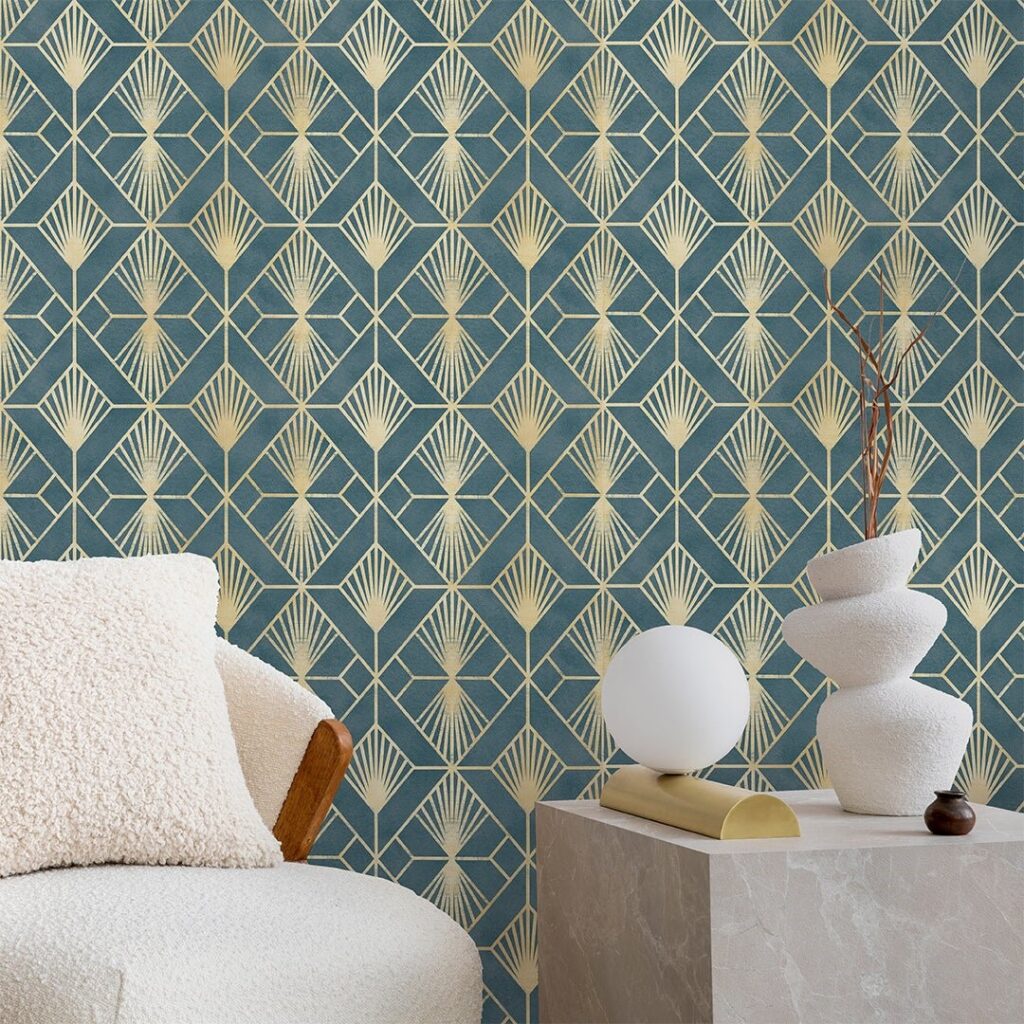
Art Deco is not a shy aesthetic, but the color combinations you choose will determine whether the result feels timeless or overwhelming.
The classic pairings are classics for a reason. Black and gold is the most iconic — graphic, glamorous, and surprisingly versatile. It works with warm wood tones, marble surfaces, and jewel-toned upholstery. Navy and brass is a softer entry point that still reads as distinctly Art Deco without the full drama of black. Emerald green and gold is the most maximalist of the core combinations — extraordinary in a dining room or powder room, but requires confidence.
For a more contemporary take, designers are currently pairing Art Deco patterns in unexpected colorways: dusty rose and champagne, deep terracotta and bronze, or even all-white geometric wallpaper for an understated version of the look that keeps the pattern without the drama of high contrast.
The Peel and Stick Advantage for a Bold Pattern
Committing to Art Deco wallpaper on a full wall can feel like a significant decision — it’s a strong pattern with a specific point of view. Peel and stick format makes that decision considerably easier. You can apply it, live with it, and remove it without any wall damage if the look isn’t quite right for the space.
CostaCover offers Art Deco wallpaper in peel and stick format across a range of colorways and pattern scales — worth exploring if you want to test the aesthetic before going all in. Pattern scale in particular is worth paying attention to: a large-scale fan pattern reads very differently in a small powder room than in a full dining room, and seeing the options side by side helps you calibrate.
Start with one wall. See how it changes the room. Chances are, you’ll want more of it.